



Australia's Working Holiday Visa - The Complete Guide For 2026
by Jessie Chambers 2 years ago
13 MIN READ
This article was reviewed and updated June 16th, 2026
If you're thinking about Australia, the Working Holiday Visa isn't just permission to visit. It's your ticket to actually live there. Tens of thousands of people use it every year to swap their normal life for something completely different, and most of them wish they'd done it sooner.
Picture This:
- Surfing at Bondi Beach: Catch those waves and soak up the sun
- Exploring the Outback: Experience breathtaking scenery and unique wildlife
- Experiencing a BBQ in Brisbane: Enjoy the laid-back Aussie lifestyle with new friends
Australia's most popular Working Holiday Visa is the subclass 417 and the subclass 462, and honestly? They’re your golden ticket to the adventure of a lifetime. Your eligibility depends on your passport (sorry, not sorry - bureaucracy is unavoidable), but if you qualify, you're in for a ride.
This visa is valid for 12 months from the day you touch down. But here's the thing: if you fall in love with the place (which, spoiler alert, you absolutely will), you can extend it by doing specified work in regional areas. Some people end up staying two years. Some stay three. Some "forget" to leave and end up married to a surfer named Brett with a cattle farm in Queensland. We've seen it all.
This guide covers everything you actually need to know - no fluff, no government jargon that makes your eyes glaze over. Just the good stuff: visa eligibility, how to apply without losing your mind, landing a job matching opportunity before you even pack your bags, where to base yourself for maximum fun, what to do when you're not working (for the record: a lot), and how Global Work & Travel makes the whole planning process way, way easier.
Think of this as the honest version your friend who just got back would tell you over drinks - minus the part where they show you 500 identical sunset photos and insist each one is "different." You're welcome.
Visa Options & Requirements
The Subclass 417 & Subclass 462 Working Holiday Visas
Here's the deal: Australia's Working Holiday Visas, subclass 417 and 462, are what make this whole thing work. No fancy talk needed. These are the visas that get you in, let you work, and give you up to three years if you play it right. Which one you need depends on your passport, but both open the same doors: beaches, outback, cities, jobs, adventures. Simple as that.
Who Can Apply?
Subclass 417
If you've got a passport from Belgium, Canada, Cyprus, Denmark, Estonia, Finland, France, Germany, Hong Kong, Ireland, Italy, Japan, South Korea, Malta, Netherlands, Norway, Sweden, Taiwan, or the United Kingdom, you're in business.
Age limits? Here's where it gets interesting. Most countries stick to the 18-30 range, but if you're from Canada, Denmark, France, Ireland, Italy, or the UK, you've got until you're 35 to pull this off. So if you're 32 and thought you'd "missed your chance" - surprise! You haven't.
Subclass 462
If you've got a passport from Argentina, Austria, Chile, Brazil, China, Czech Republic, Ecuador, Greece, Hungary, India, Indonesia, Israel, Luxembourg, Malaysia, Mongolia, Papua New Guinea, Peru, Poland, Portugal, San Marino, Singapore, Slovak Republic, Slovenia, Spain, Switzerland, Thailand, Turkey, USA, Uruguay and Vietnam, add Aus to the Working Holiday bucket list.
Age limits? You need to apply for this visa before you turn 31.
What Do You Actually Need?
Beyond being the right age with the right passport, here's what Australia wants to see:
- Money in the bank: You'll need to prove you've got sufficient funds to support yourself when you arrive. The magic number is generally around AUD $5,000, though it varies slightly.
- Health check: Depending on your country and circumstances, you might need a medical examination.
- Character requirements: Essentially, don't have a serious criminal record. Minor traffic violations? Not an issue. Bank robbery? Probably going to be a problem.
- Australian Values Statement: You'll need to sign or accept this, which is basically confirming you'll respect Australian laws and not be a nightmare human. Pretty reasonable ask.
- No debts to Australia: If you or your family owe the Australian government money from a previous visit, that needs to be sorted first. Clean slate and all that.
Extending Your Stay (Because You'll Want To)
Here's the beautiful part: if you fall in love with Australia - and honestly, you probably will - you don't have to leave after 12 months. Complete three months (88 days) of specified work in regional areas and you unlock a second 12-month visa. What counts as "specified work"? Think agriculture, hospitality in regional areas, construction, mining, fishing, tree farming, even disaster recovery. Basically, work that supports regional Australia.Do another six months of regional work during your second year? Boom. Third 12-month visa unlocked.
The work that counts toward your extension includes:
- Plant and animal cultivation (farms, vineyards, orchards)
- Fishing and pearling
- Tree farming and felling
- Mining
- Construction
- Bushfire recovery and natural disaster work
- Tourism and hospitality in regional/remote Australia
Your second and third visa applications need to happen while you're still in Australia, so plan accordingly. But don't worry - we'll help you navigate all of this if you decide the "Australian effect" is real and you're not quite ready to leave. Your Trip Coordinator (yep, the same person who helped with your first visa) can guide you through the extension process when the time comes.

How We Make The Visa Process Easy
If all this visa jargon is giving you a headache, here's the thing: you don't have to figure it out alone.
When you book with us at Global Work & Travel, you get a dedicated Trip Coordinator assigned to you before you even start your application. We've been doing this since 2008, and our team has guided over 100,000 travelers through this exact process. Your Trip Coordinator knows the visas inside out - they've done this literally thousands of times, and they'll walk you through every single step.
We're basically your visa sherpas. You're still doing the actual application - it has to come from you - but we're right there making sure you don't miss anything, submit the wrong documents, or accidentally tank your own application because you misread a question.
And because we're guiding you from day one, your visa is usually approved and in your hands well before you leave. No last-minute stress. No wondering if you'll actually be able to go. Just confidence that the bureaucratic bit is handled, and you can focus on the fun stuff - like figuring out if you're Team Sydney or Team Melbourne (we'll help with that too).
How You Can Fund the Adventure
Let's talk money. Specifically, how you'll make it while you're here.
We partner with organisations across Australia in a range of industries, and most of our travellers land entry to mid-level roles that are social, flexible, and genuinely fun. The kind of jobs where you meet people, learn random skills (can you pull a proper espresso? you will), and have enough freedom to actually enjoy the country you came to see.
Hospitality & Tourism
Beachside cafes, city bars, resort restaurants, holiday parks. You're serving coffee, pouring beers, waiting tables, or coordinating activities. Aussie hospitality pays well, the vibe is social, and many employers include accommodation. Plus, you're usually based somewhere stunning.
Ski Resorts (Not a Typo!)
Australia has real snow, June to September. Resorts like Thredbo and Perisher hire hundreds of working travellers every season. Do a ski season, then head north for summer coastal work. Two completely different experiences, one visa.
Regional & Second Year Visa Work
Hospitality in remote areas, labour, construction, agriculture. Pubs in outback towns, resorts in tropical North Queensland, landscaping, fencing. These jobs count toward your second year visa, pay well, and are often the ones people remember most.
Labour & Construction
Warehouses, landscaping, painting, general labour. Physical work, decent pay, no fake smile required.
Sales & Customer Service
Surf shops, boutiques, visitor centers. More stable than hospitality, ideal if you're staying put for a bit.
(Alternatively, you can read our guide on how to get a job in Australia as a foreigner)
Best Cities & Regions to Base Yourself
Australia is massive, and where you base yourself will shape your entire experience. Here are the places most working travellers end up, and what makes each one worth considering.
Sydney (the Aussie gem)
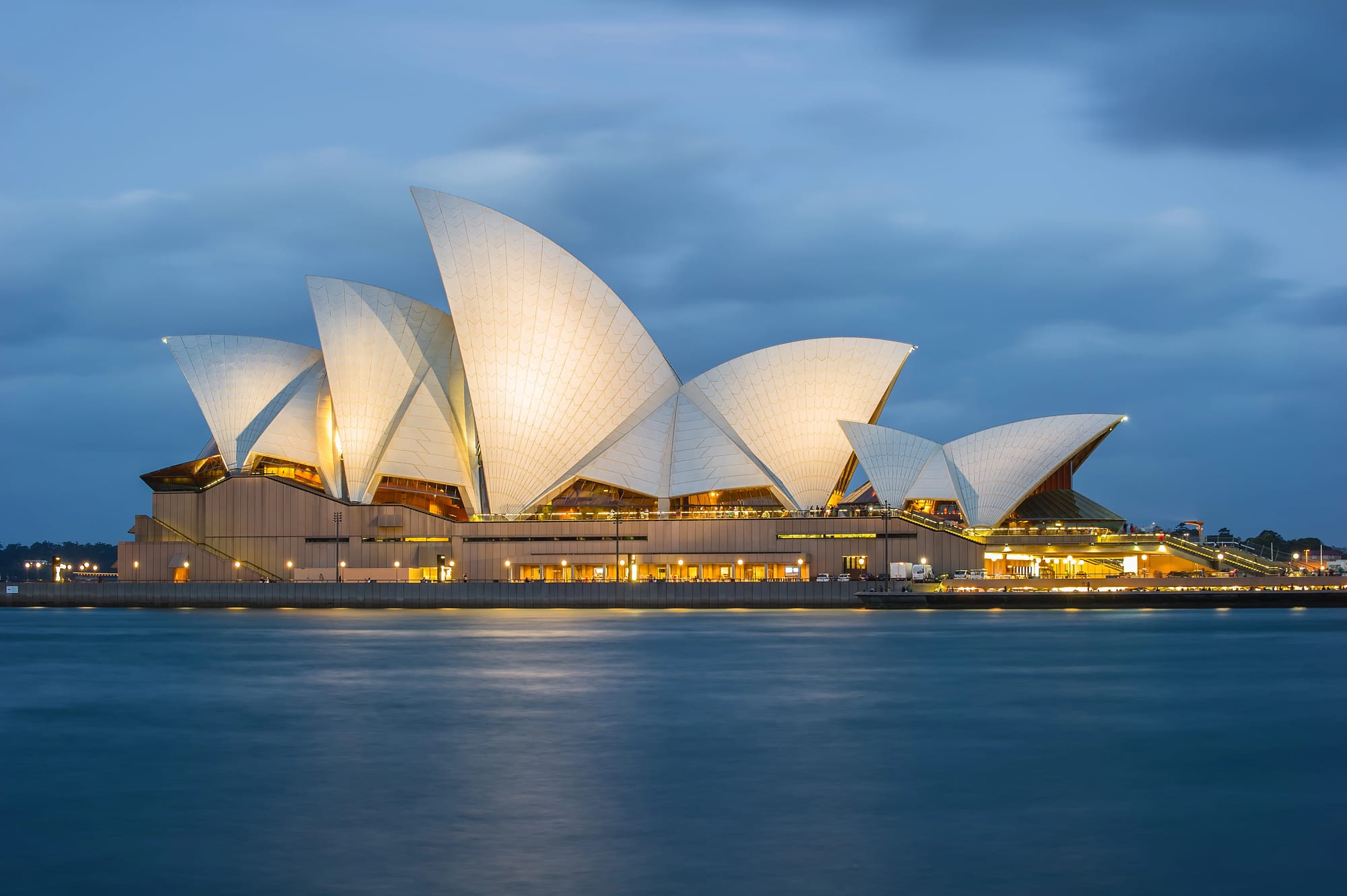
Sydney is the postcard: harbour views, Opera House, Bondi Beach. It's cosmopolitan, has a strong expat community, and is literally beautiful. The job market is strong (hospitality, retail, and tourism roles are everywhere) but so is the competition. Rent can be a little more pricey, so just be aware the lifestyle comes with a cost. That said, Sydney delivers on so much nowhere else in the world can. The beach culture is real, the nightlife is world-class, and the food scene rivals any major city globally.
The hit list:
- Best bar for meeting travellers: The Coogee Bay Hotel
- Best coffee: Single O in Surry Hills
- Best neighbourhood for nightlife: Kings Cross or Newtown
- Best cheap eats: Spice Alley for Asian food
- Best free activity: Bondi to Coogee coastal walk.
Melbourne
Melbourne is Australia's culture hub. Laneway cafes, street art, live music, and a cafe culture that borders on obsessive. The city has a cooler, more European vibe than Sydney, and the weather is famously unpredictable (four seasons in one day is not a joke). Jobs are brimming, especially in hospitality, and the city is more affordable than Sydney, though still pricey by global standards. Melbourne is where you go if you care about good coffee, indie music, and arts festivals.
The hit list:
- Best bar for meeting locals: The Toff in Town
- Best coffee: Market Lane Coffee
- Best street for wandering: Hosier Lane for street art and Brunswick Street for bars
- Best brunch: Higher Ground
- Best free activity: Queen Victoria Market on Sundays
Brisbane
Brisbane has this 5 a.m. run club energy. Active, outdoorsy, energetic. It's smaller and more laid-back than Sydney or Melbourne, which makes it easier to settle in quickly. The climate is subtropical, so it's warm most of the year, and you're only an hour from the Gold Coast or Sunshine Coast beaches. Jobs are steady, rent is more reasonable, and the city has a growing food and bar scene that punches above its weight.
The hit list:
- Best bar for meeting travellers: The Beat Megaclub
- Best coffee: Campos Coffee in Newstead
- Best neighbourhood for nightlife: Fortitude Valley
- Best cheap eats: West End markets
- Best free activity: South Bank Parklands and the artificial beach
Perth
Perth is a little more isolated (Australia's west coast, thousands of kilometres from the east) but that isolation creates a distinct culture. Long stretches of pristine beaches, a relaxed pace, and a strong mining economy that creates well-paid job opportunities. Perth feels smaller and quieter than the east coast cities, but the lifestyle is hard to beat if you value space, sunshine, and ocean access.
The hit list:
- Best bar for meeting travellers: Northbridge Brewing Company
- Best coffee: March Coffee Studio
- Best neighbourhood for nightlife: Northbridge
- Best cheap eats: Eat Street Northbridge
- Best free activity: Cottesloe Beach at sunset
Top Tip: Don't lock yourself into one place for your entire year. Many travellers start in a city (Sydney, Melbourne, Brisbane) to get settled, then move to regional areas for specified work or seasonal jobs, then finish within a few months somewhere completely different. Mobility and flexibility are your friends.

Booking With Global Work & Travel
Here's the painful part most people hit: arriving in Australia unprepared costs time, money, and stress. You land with nowhere to live, no job lined up, no idea how to set up a bank account or get a Tax File Number. You spend weeks in hostels, burning through savings while competing with locals and other backpackers for work. It's doable, sure. But it's expensive, nerve-wracking, and honestly? A bit of a nightmare.
We've helped over 100,000 travelers skip that nightmare and land prepared instead. Here's how.
Working Holiday in Australia (Plus - 2for1)
The type of trip that has all the bells and whistles included, ensuring your lead-up, arrival, and stay are elite. One of our most booked trips for the convenience and the comprehensive support throughout the entire booking process. You can book with just a $1 deposit to get the momentum swinging in full force.
What's Included:
Before You Leave:
- Guaranteed job match pre-arrival*
- 2nd Working Holiday trip to keep the adventure going (choose from New Zealand, Canada, or UK)*
- Dedicated Trip Coordinator
- Working holiday visa guidance
- Personal Travel Concierge
- Pre-Departure Guide
When You Arrive:
- Private airport transfer (no navigating public transport with 30kg of luggage)
- 3 nights accommodation (Melbourne or Gold Coast)
- "Welcome to Australia" virtual orientation
- Local life essentials: SIM with one month of data and credit
While You're There:
- Welcome activities - Bar crawl (Melbourne), surf lesson (Gold Coast), Skydeck tour (Melbourne), Australian wildlife encounter (Gold Coast), Aussie experience days (Gold Coast & Melbourne)
- Great Barrier Reef excursion
- Unlimited Local Jobs access
- Permanent accommodation resources
- Ongoing local team support (two offices in Australia - Melbourne & Gold Coast)
- Global Emergency Line (24/5 support if things go sideways)
- gWorld app access
Working Holiday in Australia
Same job match guarantee, same Trip Coordinator support, same visa guidance. Just without the second Working Holiday Trip and few extras. Still way easier than doing it alone.
Working Holiday in Australia (Lite)
Stripped-back for independent travellers who want the essentials without the full experience. Airport transfer, a few nights accommodation sorted and trips and tour options. You handle the rest.
Final Thoughts
If you've got the right passport and you're between 18 and 35 (for select visas and countries), your 12 months Aussie stint could easily turn into two or three years if you fall in love with the place. Which, let's be honest, will be hard not to do.
The visa process is straightforward when you've got someone walking you through it. The jobs are out there - hospitality, tourism, ski resorts, regional work - and they pay well enough to fund your travels and then some. The cities (Sydney, Melbourne, Brisbane, Perth) each have their own vibe, and you're not locked into just one.
Look, the hardest bit isn't the logistics. It's just deciding to actually do it. Most people who've done this don't come back regretting it - they come back wishing they'd gone sooner or stayed longer.
We help sort the boring stuff (visa guidance, job matches, airport transfers, getting set up when you land) so you can focus on the actual experience instead of stressing about admin at 2 a.m. We've done this with over 100,000 travellers, so we know what works and what doesn't.
If you're sitting there thinking about it, wondering if it's the right time or if you can actually pull it off - you probably can. And honestly? What's the worst that happens? You spend a year in Australia, make some mates, earn some money, see some incredible places, and come home with stories that make everyone jealous.
Frequently Asked Questions (FAQs)
What is a Working Holiday Visa for Australia?
It's a visa that lets young people (generally 18–30, or up to 35 for some countries) live, work and travel in Australia for up to 12 months, extendable to two or three years through regional work. There are two types — subclass 417 (Working Holiday) and subclass 462 (Work and Holiday) — and which one you get depends on your passport.
What's the difference between the subclass 417 and 462 visas?
They offer the same rights but cover different countries. The 417 is for nationals of places like the UK, Ireland, Canada, Japan and most of Western Europe. The 462 is for nationals of countries like the USA, China, India, Indonesia, Malaysia, Thailand and parts of South America — and some 462 countries require proof of tertiary education or functional English.
Who is eligible for the Australian Working Holiday Visa?
You need to be 18–30 (up to 35 for 417 applicants from Canada, Denmark, France, Ireland, Italy or the UK), hold an eligible passport, show around AUD $5,000 in funds, meet character and health requirements, and accept the Australian Values Statement.
Do I need to enter a ballot for the Australian Working Holiday Visa?
Only if you hold a passport from China, India or Vietnam. Those countries use a Work and Holiday ballot — you register, pay a small fee (around AUD $25), and must be randomly selected before you can apply. Everyone else applies directly, though many 462 countries have annual caps that reopen each program year.
How much does the Australian Working Holiday Visa cost?
The visa application charge is AUD $670. Ballot countries (China, India, Vietnam) pay an extra registration fee of around AUD $25. You'll also need to show roughly AUD $5,000 in funds, though that's proof of savings, not a fee.
How do I apply for a Working Holiday Visa?
You apply online through the Department of Home Affairs' ImmiAccount portal: create an account, complete the 417 or 462 application, upload your passport and proof of funds, pay the charge, and submit. Approval usually takes a few weeks. (Ballot countries must be selected first.)
Can I extend my Working Holiday Visa?
Yes. Complete 88 days (three months) of specified work in regional Australia during your first year to unlock a second 12-month visa, and six months of regional work during your second year to unlock a third. Specified work includes agriculture, construction, mining, fishing, tree farming, disaster recovery, and tourism/hospitality in regional areas.
What counts as specified regional work?
Plant and animal cultivation (farms, vineyards, orchards), fishing and pearling, tree farming and felling, mining, construction, bushfire and natural-disaster recovery, and tourism or hospitality in regional and remote Australia.
What are my tax obligations while working in Australia?
You'll need a Tax File Number (TFN), and your employer withholds tax from your pay. Working holiday makers are taxed at 15% on income up to AUD $45,000. The financial year runs 1 July–30 June; file a return at the end to claim any refund.
Can Australians get a working holiday visa?
Not for Australia itself — it's for incoming travellers. But Australian passport holders can do a working holiday in over 45 other countries, including Canada, the UK, Ireland, Japan and across Europe. See our other country guides for where Australians can go.
Ready to live and work abroad? We run Working Holiday programs in Australia, Canada, New Zealand, the United Kingdom, Ireland, Japan, South Korea, and the United States.
Planning your next move? We also publish in-depth working holiday visa guides for destinations all over the world.
Oceania & the Pacific: Australia, New Zealand, and Papua New Guinea. North America: Canada and the United States. South America: Argentina, Brazil, Chile, Ecuador, and Peru. Western Europe: the United Kingdom, Ireland, France, Germany, the Netherlands, and Austria. Southern Europe: Spain, Italy, Portugal, and Greece. Northern & Eastern Europe: Norway, Estonia, the Czech Republic, and Slovakia. Middle East: Israel. Asia: South Korea, Hong Kong, Taiwan, Singapore, Malaysia, Indonesia, Vietnam, and Mongolia.

Jessie Chambers
Jessie is a globetrotter and storyteller behind the Global Work & Travel blog, sharing tips, tales, and insights from cities to remote escapes, informed by the collective experience and real-world knowledge of teams across our business.